A step-by-step plan for clearing a suite or floor between tenants — from data security and e-waste to freight-elevator logistics and a broom-swept handover.
An office turnover is a different animal from a house cleanout. You’re not just hauling furniture — you’re protecting sensitive records, coordinating around a working building, and handing the space back in whatever condition the lease demands. Miss a step and you can lose the freight elevator slot, expose tenant data, or eat into a deposit because the suite wasn’t left broom-swept. This checklist walks Omaha property managers through a clean, repeatable process for clearing a suite or a full floor between tenants. It covers the office-specific parts the average junk-hauling article skips: document security, e-waste, certificate-of-insurance requirements, and building access. When the sorting is done and it’s time to move the bulk out, Midwest Removal handles the heavy lifting so you can focus on the turnover.
1. Build your cleanout timeline
Office cleanouts fail when they’re treated as last-minute. The single biggest predictor of a smooth turnover is lead time, because building access, insurance paperwork, and data destruction all have their own schedules. Work backward from your target handover date.
| Timeframe | What to lock in |
|---|---|
| 3–4 weeks out | Confirm the lease surrender terms, notify the outgoing tenant of expectations, and set the target date. |
| 2 weeks out | Inventory and sort, schedule certified shredding and drive destruction, and book your removal quote. |
| 1 week out | Reserve the freight elevator and loading dock, submit the certificate of insurance, and label what stays vs. goes. |
| Cleanout day | Supervise the sort-out, keep aisles and exits clear, and let the crew load the haul. |
| After the haul | Do a final walkthrough, photograph the empty space for the lease file, and collect keys and access badges. |
2. Sort everything into six buckets
Before anything leaves the building, run a single walkthrough and assign every item to one of six categories. Sorting first prevents the two most expensive mistakes: throwing away something the incoming tenant or owner wanted kept, and paying to haul items that could have been donated or that never should have gone in a dumpster.
Keep / Relocate
Donate
Recycle
Shred / Destroy
Haul Away
Hazardous
Label each zone of the office with painter’s tape as you sort, so nobody has to guess on cleanout day. The “keep” pile is the one worth double-checking with the owner or incoming tenant in writing — once the crew arrives, everything else is going.
3. Handle documents & data first
This is the step that separates an office cleanout from every other kind. A departing business often leaves behind file cabinets of client records, HR paperwork, and old hard drives — and once that material leaves the building unsecured, you’ve got a liability problem. Deal with data before the haul, never during it.
Do this before removal day
- Shred paper records through a certified provider — get a certificate of destruction for the lease file.
- Wipe or physically destroy any hard drive, copier, or printer that stored data. Office copiers keep images on internal drives.
- Recover any leased-equipment serial numbers and confirm what must be returned to the vendor vs. removed.
Midwest Removal is a hauling service, not a certified shredding or data-destruction company, so arrange those specialty steps separately. Once the records are destroyed and the drives are wiped, the emptied cabinets, dead machines, and stripped copiers become ordinary cleanout items we can take.
4. Electronics & e-waste
Offices generate far more electronic waste than homes, and most of it shouldn’t go in a dumpster. Monitors, batteries, and older equipment can contain materials that don’t belong in a landfill, and responsible recycling keeps your turnover clean from a sustainability standpoint too. Once the data is handled, sort your electronics like this:
- Computers & monitors — desktops, laptops, and displays (including old CRT-style monitors) get recycled rather than trashed.
- Printers, copiers & servers — bulky and heavy; the crew carries them out so your staff doesn’t risk an injury.
- Cables, phones & peripherals — the mixed-cable drawer, desk phones, keyboards, and docking stations add up fast across a floor.
- UPS units & batteries — flag these separately; batteries follow different disposal rules than the equipment they power.
Midwest Removal hauls office electronics and recycles them responsibly through Omaha-area partners as part of a standard cleanout, so you don’t need to make separate trips to a drop-off site. See the full list of what we do and don’t take on our things we don’t pick up page.
5. Furniture: donate, liquidate, or haul
Office furniture is usually the largest share of a cleanout by volume — cubicle systems, desks, conference tables, task chairs, and rows of filing cabinets. Before you write it all off as junk, run each piece through three quick questions.
Is it worth reselling?
High-end conference tables, newer ergonomic chairs, and modern workstations can carry resale value through a used-office-furniture dealer. If the timeline allows and the volume justifies it, liquidation can offset turnover costs.
Can it be donated?
Serviceable desks, chairs, and shelving are exactly what local nonprofits, schools, and startups look for. Donation clears the space, may generate a receipt, and keeps usable goods out of the landfill. Midwest Removal donates usable items to charity partners whenever possible.
Does it just need to go?
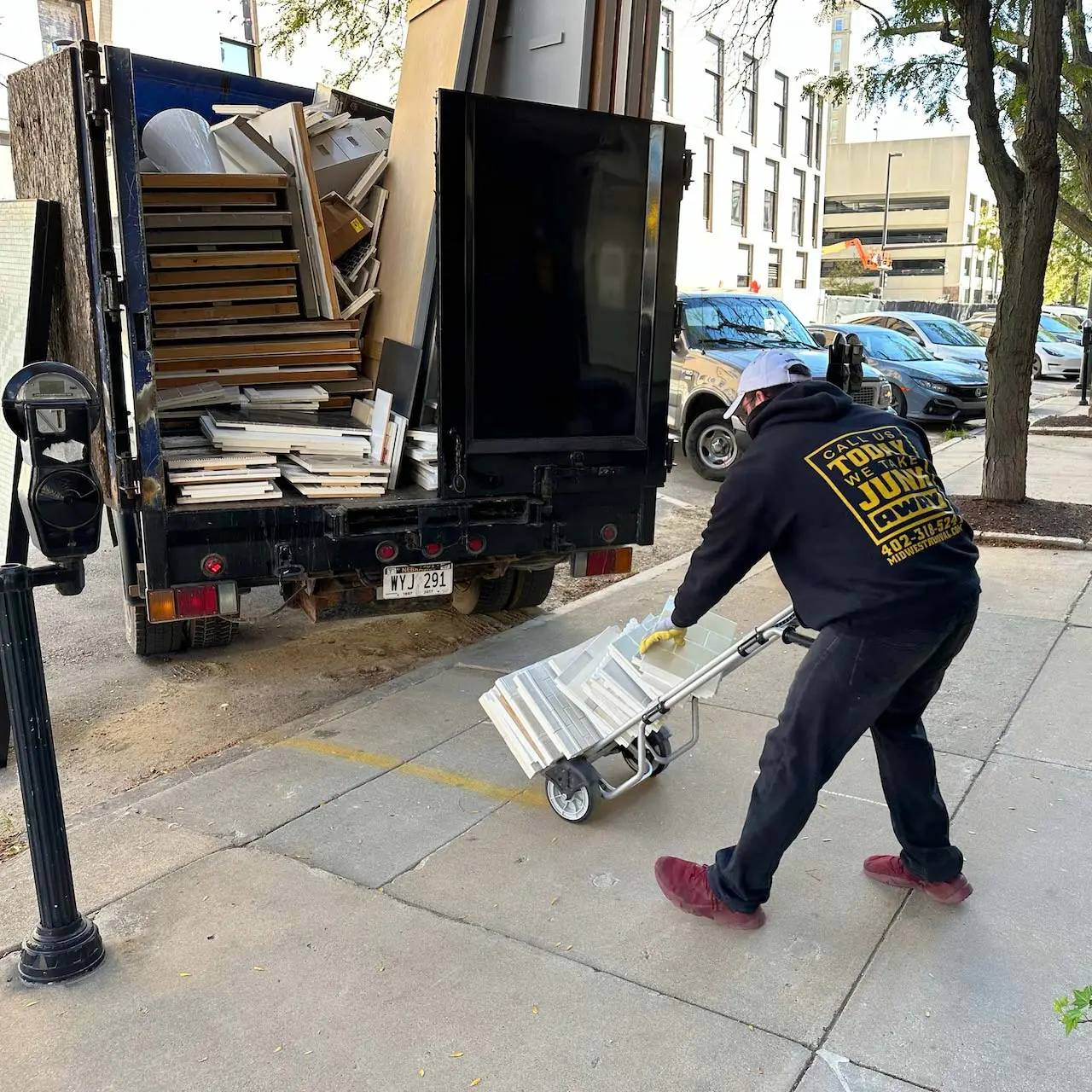
Damaged cubicle walls, wobbly chairs, particle-board desks that won’t survive a move, and anything past its useful life should simply be removed. That’s the bulk of most cleanouts, and it’s where a professional crew earns its keep — disassembling cubicles, carrying heavy cabinets down freight elevators, and loading it all without dinging the walls you’re trying to hand back in good condition. The same logic applies whether you’re turning over a single office or an entire building. For larger commercial spaces, our warehouse cleanout service and real estate cleanout service follow the same all-inclusive approach.
Same-day
All-inclusive
Fully insured
6. Building & lease logistics
In a multi-tenant Omaha office building, the cleanout itself is often the easy part — it’s the building rules that trip people up. Sort these out a week ahead so removal day goes off without a call from an annoyed building manager.
- Certificate of insurance (COI). Most buildings require the hauler’s COI naming the owner or management company before anyone touches the freight elevator. Confirm your vendor is insured and request it early.
- Freight elevator & loading dock. Reserve a time window in writing. On a full-floor cleanout, elevator access is the bottleneck that controls the whole day.
- Quiet-hours timing. If the building is occupied, ask about a quieter window. Crews run Monday through Friday, 8am to 5pm.
- Truck access & parking. Confirm where the crew can stage the truck, especially for downtown Omaha addresses with limited dock space.
- Lease surrender condition. Check the surrender clause — most require the space broom-swept, with tenant signage, cabling, and non-standard fixtures removed. Know what “original condition” means for this lease.
7. The printable office cleanout checklist
Here’s the whole process in one place. Copy it into your turnover file and check off each item as you go.
Office Cleanout Checklist
Plan (3–4 weeks out)
- Confirm lease surrender terms and target handover date
- Notify the outgoing tenant of move-out expectations
- Walk the space and note anything the owner wants kept
Prep (2 weeks out)
- Sort every item: keep, donate, recycle, shred, haul, hazardous
- Schedule certified document shredding & hard-drive destruction
- Get a free removal quote and book the haul date
Confirm (1 week out)
- Reserve the freight elevator and loading dock window
- Submit the hauler’s certificate of insurance to building management
- Back up and wipe all IT equipment; label what stays vs. goes
Cleanout day & handover
- Supervise the sort-out; keep exits and aisles clear
- Crew removes furniture, electronics, and debris
- Final walkthrough: broom-swept, signage & cabling removed
- Photograph the empty space; collect keys and access badges
Every office is different, but this sequence keeps a turnover predictable — and it scales from a single suite to a whole building. When you’re ready for the removal itself, that’s where we come in.
Frequently asked questions
How far in advance should a property manager plan an office cleanout in Omaha?
What should we do with old office computers, monitors, and electronics?
Can Midwest Removal take away old cubicles, desks, and filing cabinets?
Do you provide a certificate of insurance for our building?
Can the cleanout happen after hours to avoid disrupting our tenants?
How is office cleanout pricing calculated?
Book Your Office Cleanout with Midwest Removal
Omaha’s trusted junk removal team for property managers — fully insured, all-inclusive volume pricing, and flexible scheduling that works around your tenants. Get a free, no-obligation on-site estimate.
Related reading